
Getting liquid nitrogen from a bulk storage tank to a piece of equipment may sound straightforward. But in cryogenic applications, the condition of the nitrogen when it arrives can be just as important as getting it there in the first place.
Liquid nitrogen (LN2) is used in applications ranging from food and beverage packaging to pharmaceutical preservation, semiconductor manufacturing, and laboratory testing. Each has different requirements, but they share a common challenge: maintaining a reliable supply of LN2 under the right operating conditions.
As liquid nitrogen travels through a piping system, heat gain, pressure changes, and vapor formation can influence its delivery. Managing these factors is essential for applications that depend on consistent cooling, precise dosing, or low-pressure liquid supply. That’s why a complete cryogenic plumbing design must account for more than the piping itself.
Understanding the Challenge of Two-Phase Flow
Liquid nitrogen exists at extremely low temperatures. Even with effective insulation, some heat can enter the piping system as LN2 travels from storage to the point of use.
When liquid nitrogen absorbs sufficient heat, some of it changes into nitrogen gas. This creates what is known as two-phase flow, where liquid and vapor are present together. While vapor formation is a natural part of cryogenic liquid handling, it can create challenges for equipment that requires a consistent supply of liquid nitrogen.
For example, a cryogenic freezer may depend on predictable LN2 availability to maintain storage conditions. A liquid nitrogen dosing system may require controlled liquid delivery to achieve repeatable dosing. Certain semiconductor applications require low-pressure, single-phase LN2 for effective cryogenic cooling. When vapor is not properly managed, the liquid delivered to these applications may become less consistent.
Why Vapor Vents Are Important
One way to manage vapor within a cryogenic piping system is through the strategic use of vapor vents. Vapor vents allow accumulated nitrogen gas to be removed from appropriate locations in the distribution network, helping keep liquid nitrogen readily available at downstream use points.
VBC’s piping configurations incorporate vapor vents to support LN2 availability throughout the system, particularly where multiple pieces of equipment are connected to a common distribution network.
This is especially important when equipment operates intermittently. During periods of reduced demand, liquid nitrogen sitting in a section of piping may gradually absorb heat and generate vapor.
Without appropriate vapor management, that gas may need to be displaced before a consistent liquid supply reaches the equipment when operation resumes. Properly positioned vapor vents help address this challenge and support more reliable LN2 delivery.
Preventing Frost at Vent Line Terminations
Vapor management also requires consideration of what happens when cold nitrogen gas exits the system. As cold gas is discharged, moisture in the surrounding air can condense and freeze on exposed surfaces. Over time, frost and ice accumulation can create maintenance concerns around vent line terminations.
The VBC system illustration highlights the use of heaters installed at the ends of vent lines to help eliminate frost buildup. This is an important reminder that cryogenic system design extends beyond the liquid supply piping. Vent routing, discharge locations, and protection against ice formation must also be considered.
Vent systems should be engineered for safe discharge, with appropriate attention to ventilation, oxygen-deficiency hazards, pressure relief, and applicable safety requirements.
The Role of Liquid/Vapor Phase Separators
Some cryogenic applications require liquid nitrogen at substantially lower pressures than those used for bulk storage and distribution. A liquid/vapor phase separator helps bridge that difference.
In a typical VBC configuration, liquid nitrogen travels from a bulk storage tank through vacuum-jacketed piping to a phase separator. The separator provides a means of separating liquid from vapor and establishing the low-pressure liquid supply required by downstream equipment. When combined with VBC’s Triax piping, the phase separator can deliver low-pressure liquid nitrogen to designated use points.
This arrangement is particularly valuable for applications where liquid quality and pressure consistency are critical. Instead of relying on a direct connection from the higher-pressure distribution system, the phase separator provides an intermediate stage for managing the liquid before it reaches the application.
Why Low-Pressure LN2 Delivery Matters
Different cryogenic processes require different operating conditions. For example, biological storage freezers may use low-pressure liquid nitrogen for preserving temperature-sensitive materials. In semiconductor epitaxy applications, cryogenic shrouds may require low-pressure, single-phase LN2 to support effective cooling and cryopumping.
In other applications, such as liquid nitrogen dosing, controlled delivery conditions help maintain repeatable operation.
These differences demonstrate why there is no universal configuration for every LN2 distribution system. The appropriate arrangement depends on the required flow rate, operating pressure, liquid condition, equipment design, and overall process requirements. A system that performs well for one application may need additional phase separation, vapor management, or pressure control components to support another.
Connecting Multiple Applications to a Common LN2 Supply
Many industrial and research facilities operate several LN2-dependent systems within the same building. One location may require liquid nitrogen for cryogenic freezing, while another uses LN2 for testing or precision dosing. A centralized distribution network can serve these different applications through multiple outlet configurations, provided the system is designed around their individual requirements.
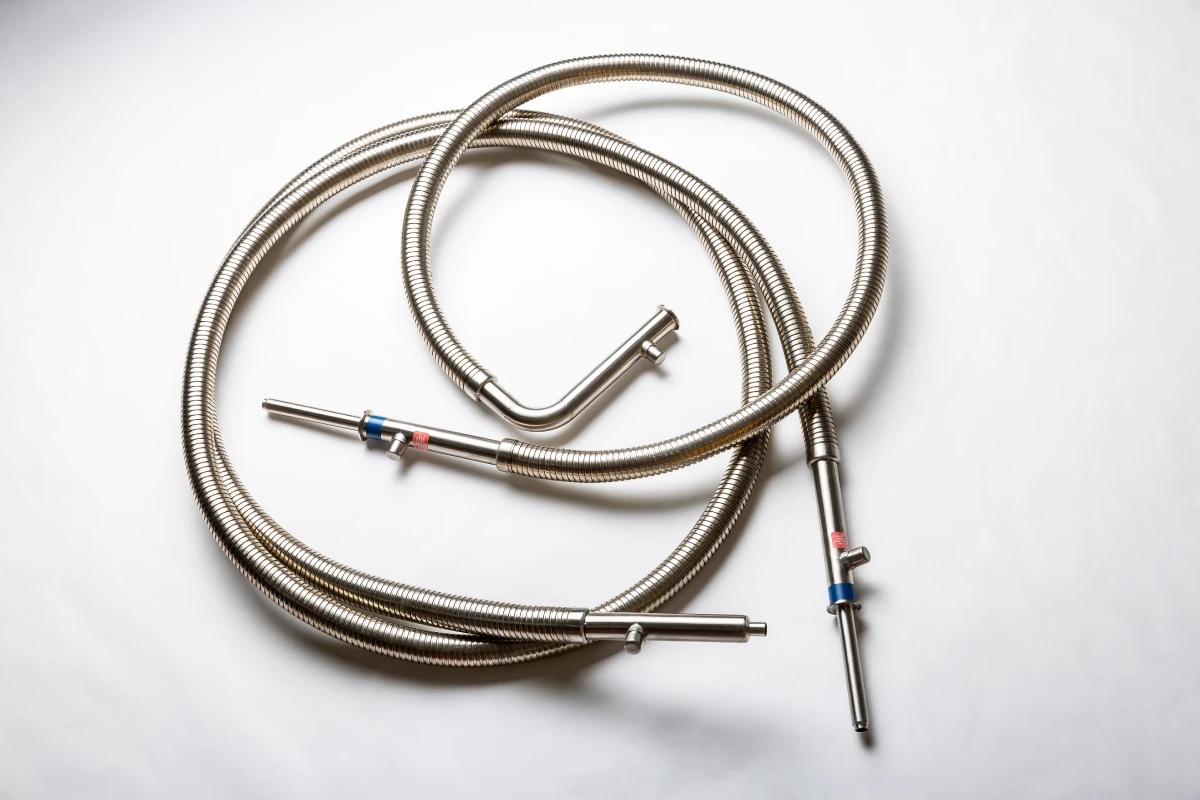
For example, VBC’s SEMIFLEX flexible piping can provide a direct supply connection to a NITRODOSE® liquid nitrogen dosing system. Other branches may incorporate phase separation and Triax piping to deliver low-pressure LN2 to cryogenic freezers or testing equipment.
The ability to combine different distribution components allows engineers to create a system suited to the needs of each application. However, the design must account for how the individual branches interact. Simultaneous equipment demand, pressure fluctuations, vapor formation, and changes in flow can all influence system performance.
This is where proper engineering and component selection become especially important.
Designing for Reliability and Long-Term Performance
Reliable liquid nitrogen delivery depends on how well the individual components work together. Vacuum-jacketed piping helps minimize heat gain. Vapor vents help manage gas formation. Phase separators provide a controlled means of delivering low-pressure liquid. Valves and modular connections help manage flow and accommodate different equipment configurations.
Each serves a specific purpose, but their combined performance determines how effectively LN2 reaches the point of use. For engineers and facility managers, evaluating these components during the initial design phase can help prevent avoidable operating challenges later.
It is also important to consider maintenance access, system monitoring, expansion requirements, and safe operation. Cryogenic systems must be designed with appropriate pressure protection, ventilation, and safeguards for handling extremely cold liquids and gases.
A Complete Approach to Cryogenic Plumbing
Liquid nitrogen distribution is about more than moving a cryogenic liquid through a network of pipes. It is about delivering LN2 at the right pressure, in the right condition, and when the application needs it.
Understanding the relationship between heat gain, vapor generation, phase separation, and downstream equipment requirements is essential to designing an effective system. With the right combination of vacuum-jacketed piping, vapor management, and phase separation technologies, facilities can create cryogenic distribution networks that support consistent performance across a wide range of applications.
Vacuum Barrier Corporation provides cryogenic piping and liquid nitrogen delivery technologies, including SEMIFLEX® vacuum-jacketed piping, Triax piping, liquid/vapor phase separators, vapor vents, and NITRODOSE® dosing systems.
To learn more about optimizing LN2 delivery for your application, visit vacuumbarrier.com or contact VBC to discuss your cryogenic system requirements.
